
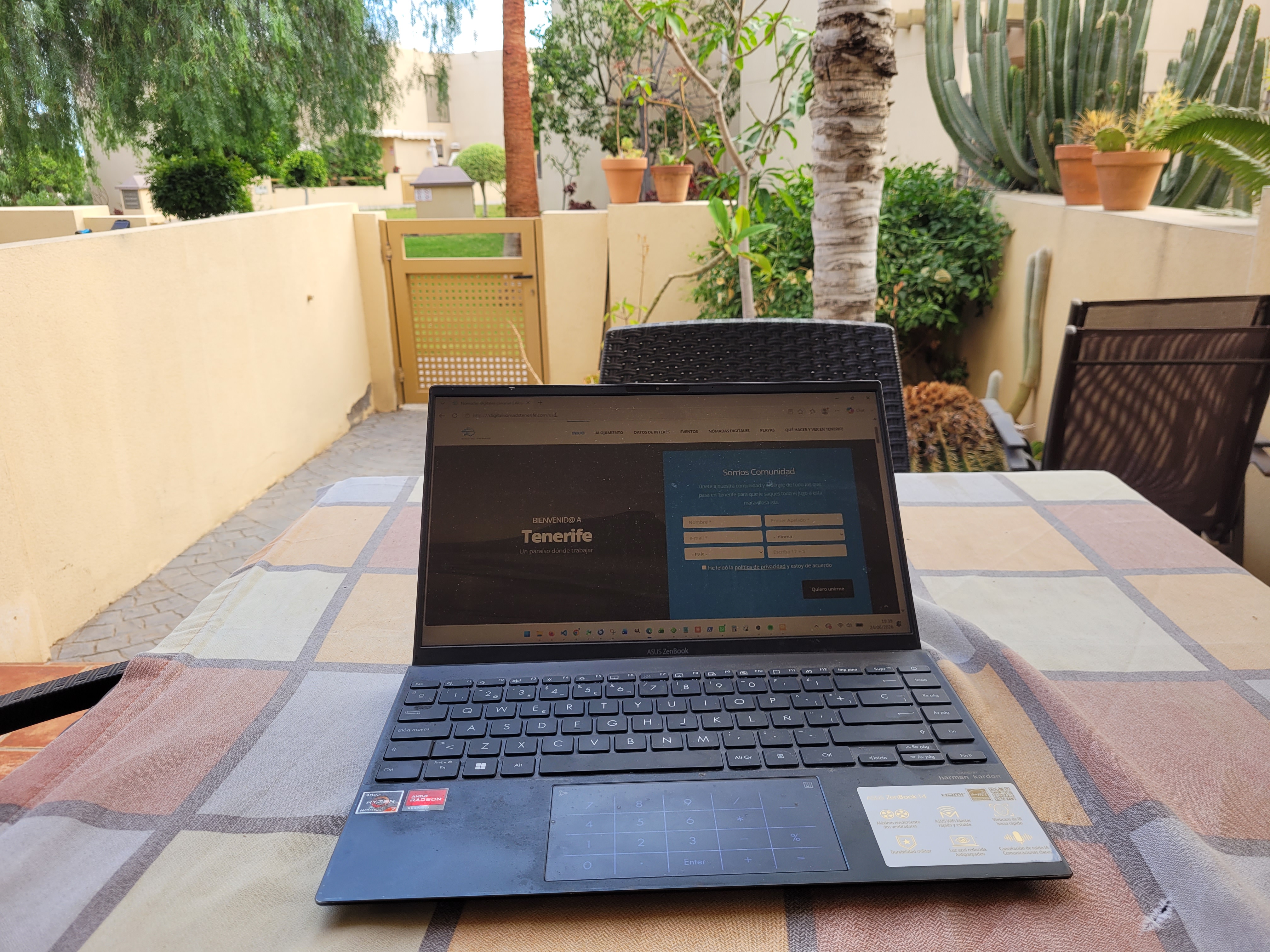
Why Work Remotely in Tenerife: The Digital Nomad’s Guide 2026
Are you considering Tenerife as a destination for remote working? You wouldn’t be the first to choose it, nor will you be the last. The largest island in the Canary Islands has been establishing itself as one of Europe’s best destinations for remote working for several years now. In this brief guide, we’ll tell you exactly why.
Climate: 365 days of spring
The most obvious reason, and also the most accurate. Tenerife enjoys over 300 days of sunshine a year, with temperatures ranging from 18 to 26 ºC depending on the area and the time of year. The south of the island including Los Cristianos, Las Américas and Costa Adeje is particularly stable: it hardly ever rains between May and October, and winters are mild and sunny.
This has a direct impact on productivity and well-being: dining al fresco in January, ending the day on the beach or starting the day with a walk on Mount Teide is not an occasional luxury but part of everyday life.
I go for a swim in the sea at least once a week all year round.
Connectivity: fibre optics and real-world speeds
One of the first questions any digital nomad asks is: Is the internet connection any good?
In Tenerife, the answer is yes. The telecoms infrastructure has improved significantly in recent years:
- Fibre-optic available in most urban areas: Santa Cruz, La Laguna, Puerto de la Cruz, Los Cristianos, Costa Adeje.
- Full 4G coverage across all inhabited areas of the island
- 3G available even in mountainous areas such as Teide National Park
- 5G is being rolled out in major cities
If you want to use a co-working space, these offer connections ranging from 300Mb to 1Gb, more than enough for video calls, cloud-based work and remote access to servers.
Cost of living: reasonable for a high-quality European destination
Tenerife isn't as cheap as some destinations in Asia or Latin America, but it does offer an excellent quality of life at a very competitive price within Western Europe.
Estimated monthly expenses (single person)
Item |
Approximate cost |
| Accommodation (studio or room in a co-living space) | 500€ - 900€ |
| Food (a mix of home cooking and restaurants) | 350€ - 500 |
| Transport (buses + occasionally by car) | 60€ - 150€ |
| Coworking (monthly membership) | 120€ - 280€ |
| Leisure and activities | 150€ - 300€ |
| Estimated total | 1.400€ - 2.100€/month |
Accommodation in the south of the island tends to be slightly more expensive, particularly during the high season. The north and the capital offer more affordable options with a very similar quality of life.
No change of country: the advantages of being part of Spain
This is a point that many digital nomads underestimate until they experience it for themselves. Tenerife is a Spanish territory and, therefore, part of Europe. This means:
- No visa required for EU citizens and no restrictions on length of stay
- Public healthcare accessible with a European Health Insurance Card
- Eurozone: no currency exchange fees
- Same time zone as mainland Europe (GMT+0 in winter, GMT+1 in summer) perfect for working with European clients
- Legal certainty and institutional stability
- Direct connections to most European capital cities via 3/4-hour flights
Digital Nomad visa in Spain
If you are a non-EU citizen, since 2023 Spain has offered the Digital Nomad Visa (formally: visa for international remote workers), which allows you to reside legally in Spain for up to 5 years whilst working remotely for companies or clients outside the country.
Main requirements
- A current employment contract or proven freelance work with clients outside Spain
- Minimum income of approximately 2,646€ per month (200% of the National Minimum Wage)
- Private health insurance with cover in Spain
- Criminal record certificate from the country of origin
- Must not have resided in Spain in the last 5 years
Why apply from Tenerife?
Tenerife is one of the preferred destinations for those applying for this visa within Spain. The consulate in Santa Cruz de Tenerife has experience with this type of application, and the island offers all the services needed to settle there: administrative support, tax advice, and co-working spaces with a registered address.
What to do when you're not working
Working remotely in Tenerife isn't just about productivity it's about quality of life. When you close your laptop, the island offers you:
- Hiking: Teide National Park, the Anaga Massif, Los Tilos Forest.
- Beaches: from the golden sands of Las Teresitas to the black volcanic sands of Playa Jardín.
- Surfing and water sports: El Médano is one of the best windsurfing spots in Europe.
- Cuisine: papas arrugadas, mojo, fresh fish, local wines,dishes you simply must try.
- Cultural life: La Laguna (a UNESCO World Heritage Site), the Santa Cruz Carnival, music festivals.
And I ask: Is Tenerife the ideal destination for you?
If you're looking for a European destination with excellent weather, good transport links, an active nomadic community and without the hassle of moving to another country, Tenerife is hard to beat. It isn't the cheapest destination in the world, but it offers a quality of life that few destinations within Europe can match at this price.
Ready to take the plunge? At Digital Nomads Tenerife, you'll find all the information you need: accommodation, co-working spaces, local services and much more to make your life on the island as easy as possible.